
Beds and Seasonal Care
Mulch Installation in Lansing
Beds edged and cleaned up, then topped with fresh mulch at the right depth to hold moisture, block weeds and give your Lansing landscape a sharp, finished look.
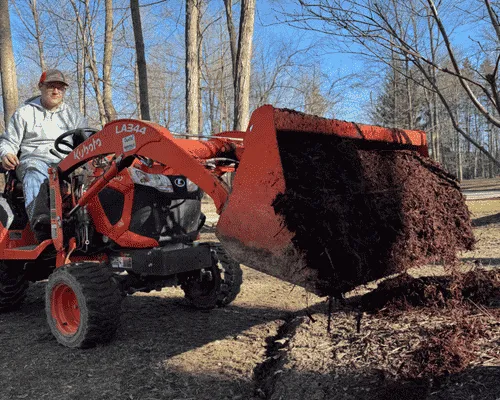
Fresh Mulch
What Does Professional Mulch Installation Include?
Fresh mulch is one of the simplest ways to make a yard look cared for, but it only looks right when the beds underneath are ready for it. At Pinnacle Landscape Group, the beds get edged and cleaned up before any mulch goes down, so the new layer sits on a clean bed instead of on top of last fall's leaves and this spring's weeds.
From there, the mulch is spread evenly at the right depth to hold moisture, block weeds and make the whole bed look sharp. Here's what a proper mulch job covers:
- Clearing out leaves, sticks and weeds first
- Cutting a clean edge where each bed meets the lawn
- Picking a mulch color that suits your house and plantings
- Spreading mulch evenly at the right depth, bed to bed
- Keeping mulch pulled back from trunks and plant stems
- Working mulch in neatly around shrubs and perennials
Depth Matters
How Deep Should Mulch Be in Landscape Beds?
For most beds in mid-Michigan, about two to three inches of mulch is the sweet spot. That's deep enough to shade out weed seeds and slow moisture loss from the soil, and shallow enough that water and air still reach the roots below.
Go too thin and weeds push through while the soil bakes dry in July. Go too deep and light rains soak into the mulch instead of the soil, and roots start creeping up into the mulch layer looking for air.
Trunks are where depth matters most. Mulch mounded against bark, the classic mulch volcano, holds moisture against the trunk and invites rot, and it gives mice and voles a sheltered spot to chew bark over the winter. A flat layer pulled back a few inches from trunks and stems avoids all of that.

Timing
When Is the Right Time to Mulch in Michigan?
Spring is the most popular time to mulch around Lansing. Once the beds are cleaned out and the soil has had a chance to warm up and dry out a little, fresh mulch locks in that moisture heading into summer. Mulching too early over cold, soggy ground can keep the soil cold longer and hold back plants that are trying to wake up.
Fall works well too. A fresh layer going into winter insulates roots and softens the freeze-thaw swings that can push newer perennials right up out of the ground. If the rest of the yard needs opening up after winter as well, a spring cleanup pairs naturally with fresh mulch.
Refresh Signs
Signs Your Landscape Beds Are Due for Fresh Mulch
Mulch is supposed to break down. As wood mulch decays it feeds the soil underneath, so a bed that's thinning out by late summer is doing exactly what it should. It just means the bed is ready for a fresh top layer. Watch for these signs:
- Bare soil showing through in patches
- Mulch that has faded to a dull gray
- Weeds sprouting all over the bed, not just here and there
- Soil that dries out soon after a good soaking rain
- Mulch or soil washed onto the walk, driveway or lawn after storms
- A matted crust on top that sheds water instead of soaking it in
- Bed edges that have blurred into the lawn
Know the Difference
Mulch Installation or Bed Maintenance: Which Do Your Beds Need?
Mulch installation is a one-time job that resets your beds. They get cleaned up, edged and covered with a fresh layer, and the whole property looks sharper for it.
What fresh mulch can't do on its own is keep a bed spotless all season. Weed seeds blow in and sprout on top, perennial weeds push up from below and grass slowly works its way across the edge. That's the job of bed maintenance: regular visits for weeding, edging and upkeep so weeds don't get ahead.
Plenty of properties do both, with fresh mulch in spring and regular maintenance visits to keep the beds looking that way. Because we're a full service crew, the same people who lay your mulch can take care of the beds afterward, so nothing gets handed off or lost in translation.
Homes and Businesses
Mulch Installation for Homes and Commercial Properties
Around homes, mulch usually goes into foundation beds, tree rings, the beds along a front walk and the planting areas around a patio. Fresh mulch with crisp edges around boxwoods and foundation shrubs is one of those details that makes the whole house look finished, whether you live in Okemos or East Lansing.
On bigger properties, bulk mulch can be moved across the yard with a compact tractor instead of one wheelbarrow at a time, which makes large beds much more manageable. For offices, retail sites and HOA common areas, sharp beds at the entrance set the tone for the whole property, and mulch work fits right into our commercial grounds maintenance.
FAQ
Mulch Installation FAQ
How much mulch do I need for my beds?
Measure the square footage of your beds and pick a depth. One cubic yard of mulch covers roughly 100 square feet at three inches deep, or about 160 square feet at two inches, so a 300 square foot bed at three inches takes about three yards.
Should old mulch be removed before new mulch goes down?
Usually not. Old mulch that has broken down is feeding the soil and can stay put. The exception is a bed where years of top-ups have piled up well past three inches, where some of the old layer should come out so the total depth stays in a healthy range.
Should trees in the lawn get a ring of mulch?
A wide, flat ring of mulch around a lawn tree keeps mowers and string trimmers away from the bark and cuts down on grass competing with the tree's roots for water. When it comes to tree rings, wider is better than deeper.
How long does mulch last in Michigan?
Wood mulch generally breaks down over a season or two, and its color fades sooner than that in full sun. That's why most beds get a fresh top layer each year, usually about an inch over what's left rather than a full new layer.

Get Started
Contact Us
Tell us about your property and what you have in mind, and our team will get back to you.
All Week: 6 AM to 6 PM
Contact Us
Tell us about your property and what you need, and our team will get back to you.