
Lawn Care
Lawn Maintenance in Lansing
Regular mowing, edging, trimming and cleanup on a set schedule all season long, so your Lansing lawn stays neat and your weekends stay yours.
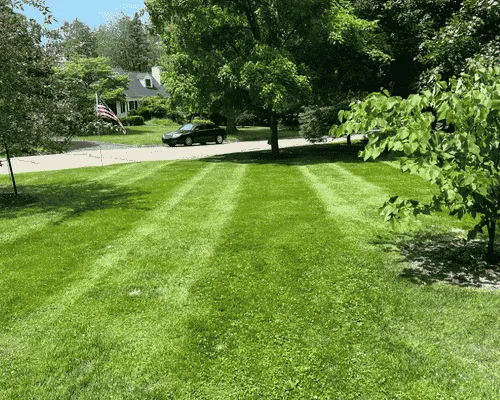
Weekly Care
What's Included in Weekly Lawn Maintenance?
Lawn maintenance from Pinnacle Landscape Group covers the regular work that keeps a yard looking cared for: mowing, edging, trimming and cleanup on a set schedule, all season. Weekly mowing is the core of it, because a steady schedule is what keeps the grass from getting away from you after a rainy stretch or a busy month.
A maintenance visit is about the finish as much as the cut. Edges along the walks and driveway get cut clean, trimmers reach the grass a mower can't, and clippings get blown off the hard surfaces, so the whole yard looks done instead of just shorter.
- Mowing on a set, recurring schedule
- Edging along sidewalks, driveways and curbs
- String trimming around trees, fences, beds and the house
- Clippings blown off walks, drives and patios
- General tidying so the property looks finished
Mowing Height
What Mowing Height Is Right for a Michigan Lawn?
Lawns in the Lansing area are almost all cool-season grass, usually a mix of Kentucky bluegrass, perennial ryegrass and fescue. Those grasses look and hold up better when they're cut tall. Somewhere around three inches, or a little higher, keeps the turf thick enough to shade out crabgrass and helps the roots hang on to moisture when summer turns dry.
The other rule worth knowing is the one-third rule: take off no more than about a third of the blade in a single cut. Scalping an overgrown lawn down in one pass shocks the grass, opens up room for weeds and leaves the yard looking brown and thin for a while afterward.
Sharp blades matter, too. A dull blade tears the grass instead of slicing it, and those ragged tips turn tan soon after, giving the whole lawn a dull, frayed look.
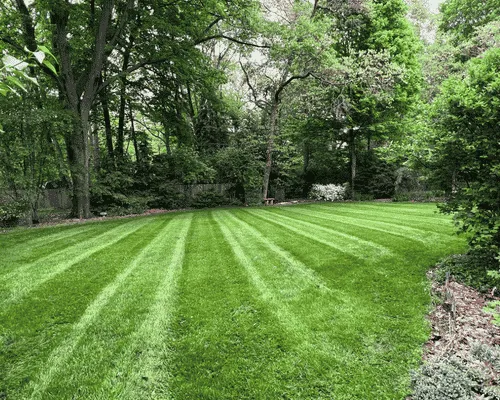
Michigan Season
How Often Should a Lawn Be Mowed in Mid-Michigan?
Cool-season grass grows on its own calendar. In May and early June, with spring rain and cool nights, a healthy lawn can put on so much growth that skipping a single mowing pushes it well past the one-third mark. That's the stretch when a weekly schedule really pays off.
Growth slows in the heat of July and August, especially in a dry summer, and a stressed lawn is better off left a bit taller. Then cooler weather in September brings a second push of growth that carries on until the grass winds down in late fall.
A set schedule takes those swings off your plate. Instead of trying to time the mowing around the weather and your own calendar, the lawn stays on a regular rhythm from the first cut in spring to the last one in fall.
Handing It Off
Signs It's Time to Hire a Lawn Mowing Service
Some people hand off the mowing because they want their Saturdays back. Others reach a point where the yard simply got bigger than the time they have for it. These are the usual signs a yard is ready for a regular mowing schedule.
- Your weekends keep disappearing into mowing and trimming
- You're mowing in the heat and still falling behind
- Clumps of clippings sit on top of the lawn after you mow
- Grass along the sidewalk and driveway keeps creeping over the edge
- The property is too big to keep up with by hand
- You own a rental or a business that has to look sharp for tenants or customers
Beyond Mowing
What Else Does a Lawn Need Besides Mowing?
Mowing keeps a lawn neat, but it can't fix what's happening under the surface. If water puddles after rain or the grass thins out where people walk, the soil is likely compacted, and fall core aeration with overseeding is the usual way to thicken it back up.
The start and end of the season take extra work, too. Spring and fall cleanups clear out what winter left behind and get leaves off the grass before the snow comes, so the mowing season starts and finishes on a clean yard. Beds are their own job, and regular bed maintenance keeps the weeding and edging on the same steady schedule as the lawn. All of it can stay with one full service crew, so you're not coordinating three different companies to keep one yard in shape.
Homes and Businesses
Residential and Commercial Lawn Maintenance Around Lansing
We mow front yards on tree-lined streets, big backyards that run out to the woods and wide-open properties where the stripes stretch a long way. For homeowners from Okemos to East Lansing, regular maintenance means the lawn is ready for the weekend instead of taking it over.
If you manage rentals, an office or a retail site, or you sit on an HOA board, commercial grounds maintenance takes the same regular schedule and adds the bed care, seasonal color and cleanups a business property needs. Either way, it's one crew that gets to know your property and keeps coming back to it through the season.
FAQ
Lawn Maintenance FAQ
Do I need to do anything before a mowing visit?
Not really. Picking up toys, hoses and anything else left on the grass keeps the visit smooth and keeps your things out of the mower's path.
Should grass clippings be bagged or left on the lawn?
On a lawn that's mowed regularly, short clippings can be left to break down, since they return nutrients to the soil and don't cause thatch. Bagging makes more sense when the grass got long and the clippings would sit in heavy clumps.
Is it bad to mow wet grass?
It's better to give a soaked lawn a chance to dry out first. Wet grass clumps and tears instead of cutting cleanly, and soft, saturated soil ruts more easily under foot traffic and equipment.
Should the lawn be cut extra short before winter?
There's no need to scalp it. Keeping up with mowing until the grass stops growing and getting leaves off the lawn before snow does more to prevent matted, moldy patches in spring.
When does mowing season start in Michigan?
In mid-Michigan, the first mowing usually comes in April or early May, once the lawn greens up and starts actively growing. Mowing typically continues into late October or November, until growth stops for the year.

Get Started
Contact Us
Tell us about your property and what you have in mind, and our team will get back to you.
All Week: 6 AM to 6 PM
Contact Us
Tell us about your property and what you need, and our team will get back to you.